When I was at university, I once asked my GP about medication for altitude.
His response has stayed with me ever since:
“There’s no such thing as altitude illness. I know — I’ve been up Mont Blanc.”
It was an extraordinary statement then.
It sounds even more extraordinary now.
Climbing Mont Blanc without becoming ill does not disprove altitude illness. It proves only that one individual, on one occasion, acclimatised sufficiently well to complete an ascent.
Altitude illness is real.
It can affect the fit.
It can affect experienced mountaineers.
It can affect medical professionals.
And I know that not simply because I studied it.
I know because, in 2009, on a winter attempt of the Barre des Écrins, two climbing partners probably saved my life.
What actually happens at altitude?
A common misconception is that there is somehow “less oxygen” in the air at altitude.
The percentage of oxygen remains broadly the same.
What changes is atmospheric pressure.
As altitude increases, barometric pressure falls. The partial pressure of oxygen therefore falls with it, meaning that fewer oxygen molecules are available to move from the lungs into the bloodstream with each breath.
The body responds immediately.
Breathing becomes faster and deeper.
Heart rate increases.
The kidneys begin altering acid-base balance.
Over time, further adaptations occur.
This process is acclimatisation.
Altitude illness develops when ascent exceeds the body’s ability to adapt.
The principal acute conditions are:
Acute Mountain Sickness — AMS
High-Altitude Cerebral Oedema — HACE
High-Altitude Pulmonary Oedema — HAPE
They range from unpleasant to rapidly fatal.
Acute Mountain Sickness — AMS
AMS often feels remarkably like a bad hangover.
Headache.
Nausea.
Loss of appetite.
Dizziness.
Fatigue.
Poor sleep.
Sometimes vomiting.
The important part is the context.
You have gained altitude and subsequently become unwell.
For the mountaineer, the basic rule is simple:
Do not continue ascending with worsening altitude symptoms.
Mild symptoms may settle if you stop at the same altitude and allow additional time for acclimatisation.
If symptoms worsen, descend.
That sounds straightforward when sitting at home.
It feels very different after months of planning, considerable expense, international travel, specialist equipment and a summit sitting apparently within reach.
Human beings are remarkably good at negotiating with themselves.
“I’m only tired.”
“I didn’t sleep properly.”
“I need more water.”
“I haven’t eaten enough.”
“I’ll feel better once we get moving.”
Altitude is completely indifferent to the quality of your excuses.
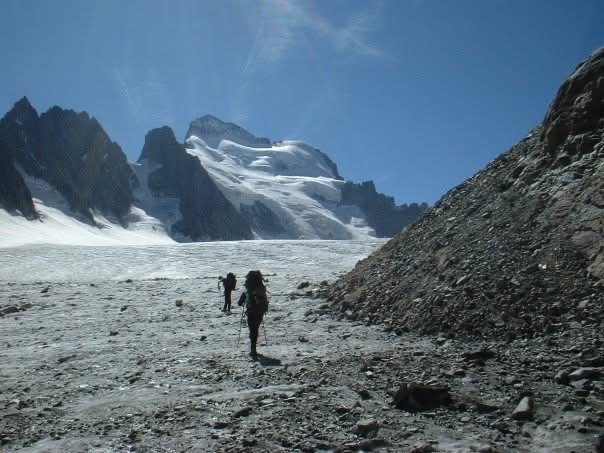
Barre des Écrins, winter 2009
In 2009 I attempted a winter ascent of the Barre des Écrins as part of a three-man expedition.
Our plan involved a relatively rapid ascent onto the plateau for an overnight stay.
The following day we would continue to the next alpine hut.
After a second night at altitude, we planned to leave at around midnight for the summit.
Two weeks before departure I had developed a chest infection and had been treated with a short course of antibiotics.
By the time we left, I considered myself fit enough to climb.
Whether that recent infection had any bearing on what followed is impossible to say retrospectively.
What certainly mattered was the ascent profile.
On the first night on the plateau, I slept badly.
A headache gradually developed.
I took aspirin and Diamox and continued.
The following day we moved higher to the hut.
The second night was completely different.
I did not sleep.
At all.
I developed what I can still describe only as the worst headache I had ever experienced.
I drank around three litres of water.
And I coughed.
All night.
By the following morning, I was seriously unwell.
The problem was that I did not believe I was seriously unwell.
“I’m fine.”
That morning, I wanted to continue.
In fact, I was insisting that I was fine.
There were, however, two fairly significant problems with my assessment.
I could not walk in a straight line.
And I was coughing up pink frothy fluid.
My climbing partners, John and Sylvian, made me sit down.
They knew I was medically trained.
So rather than attempt to lecture me on altitude medicine, they started asking questions.
At the time, I thought they were asking the most pointless questions imaginable.
“What is coughing up blood a sign of?”
“HAPE.”
“What happens if somebody with HAPE continues going up?”
“Death.”
“What can it be treated with?”
“Nifedipine.”
“What do we need to do?”
“Go down.”
Then came probably the most important question:
“Show us where the nifedipine is in the emergency drugs bag.”
That conversation has stayed with me ever since.
Because I knew all the answers.
I understood the condition.
I understood the treatment.
I understood the consequences.
What I had apparently lost was the ability to apply that knowledge sensibly to myself.
HACE — when your judgement becomes unreliable
The inability to walk in a straight line was particularly concerning.
One of the classic warning signs of High-Altitude Cerebral Oedema is ataxia — loss of coordination.
Someone who had previously been moving normally may begin staggering.
They may stumble repeatedly.
They may struggle with simple tasks.
Their behaviour can change.
They can become confused, drowsy or strangely apathetic.
Their judgement deteriorates.
And perhaps most dangerously of all, they may insist that there is absolutely nothing wrong with them.
That creates one of the strangest problems in mountain medicine.
The organ required to decide whether you are well enough to continue is the very organ being affected.
A climber developing HACE may genuinely believe they are fine.
Their companions may therefore have to make the decision for them.
John and Sylvian did exactly that.
HAPE — when the lungs begin to fail
At the same time, I was coughing up pink frothy fluid.
That raised another alarm.
High-Altitude Pulmonary Oedema affects the lungs.
Its earliest warning sign may be surprisingly undramatic.
Somebody simply cannot keep up anymore.
A climber who was moving well the previous day starts falling behind.
They stop frequently.
Their effort seems completely disproportionate to everyone else’s.
Breathlessness increases.
Then comes one of the major red flags:
breathlessness at rest.
Everyone expects to become breathless while working hard at altitude.
Sitting still and struggling to breathe is different.
A persistent cough may develop.
The chest can feel congested.
Breathing becomes progressively more difficult.
In advanced cases, sputum can become blood-stained or pink and frothy.
At that point the situation is extremely serious.
HAPE develops because hypoxia causes constriction of the pulmonary blood vessels.
That response is uneven throughout the lungs, producing abnormally high pressure in parts of the pulmonary circulation.
Fluid begins leaking into lung tissue and the alveoli.
Gas exchange deteriorates.
Hypoxia worsens.
Pulmonary vasoconstriction worsens.
The process begins feeding itself.
Without intervention it can become fatal.
Oxygen at 4,000 metres
There is an important practical distinction here.
At around 4,000 metres in the European Alps, ordinary mountaineers do not normally climb carrying bottled oxygen simply because they are at altitude.
Four thousand metres is certainly high enough to produce altitude illness.
It is not, however, an altitude at which supplemental oxygen is routinely required for a healthy climber.
For uncomplicated AMS, the normal response is not to reach for an oxygen cylinder.
It is to stop ascending.
Allow time for acclimatisation.
And if symptoms deteriorate:
descend.
Oxygen becomes important in serious HACE or HAPE, but in a small independent Alpine party it may simply not be available.
It is more likely to arrive with mountain rescue, a helicopter medical team or at a medical facility.
That means the phrase “oxygen if available” matters.
Lack of oxygen is not a reason to remain high while waiting for someone to bring it.
If you can descend safely, descent remains one of the most effective treatments available.
What was actually in our emergency medical kit?
We did not have bottled oxygen.
What we did have was a fairly comprehensive expedition medical kit.
Among the drugs we carried were:
Diamox — acetazolamide
Nifedipine
Dexamethasone
Aspirin
Diclofenac
Co-codamol
Tramadol
These medicines had very different purposes.
The altitude-specific drugs were Diamox, nifedipine and dexamethasone.
Diamox was carried because of altitude.
It assists acclimatisation and can be used in the prevention and treatment of Acute Mountain Sickness.
Nifedipine was carried for High-Altitude Pulmonary Oedema.
Dexamethasone was carried for severe altitude illness, particularly High-Altitude Cerebral Oedema.
The rest of the kit reflected a simple reality:
Mountaineering injuries are not limited to altitude illness.
You can fall.
Twist an ankle.
Damage a knee.
Fracture something.
Or develop significant muscular or soft-tissue pain several hours from help.
Co-codamol and tramadol were carried as stronger analgesia for significant traumatic pain, including minor fractures where someone might still have to endure a long and uncomfortable evacuation.
Aspirin and diclofenac provided analgesic and anti-inflammatory options, particularly for muscular pain, sprains, strains and soft-tissue inflammation.
It was not a bag of tablets to be swallowed whenever somebody felt rough.
It was an emergency toolbox.
Different drugs for different problems.
And that distinction matters.
What happened next
I was made to take nifedipine, Diamox and aspirin from our kit.
That reflected the equipment, practice and decisions being made on that mountain in 2009.
But the most important treatment was not pharmacological.
It was contained in four words:
We are going down.
Sylvian took my equipment as well as carrying his own.
John guided me down.
It was not elegant.
It was not fast.
It was a long, long, slow descent.
But it worked.
I did not die.
I did, however, discover one of the less glamorous effects of acetazolamide.
I pissed like a mountain goat.
I have genuinely never urinated so much in my life.
There is a perfectly respectable physiological explanation.
Acetazolamide affects carbonic anhydrase and promotes bicarbonate loss through the kidneys.
That produces a mild metabolic acidosis, stimulating ventilation and assisting acclimatisation.
It also produces diuresis.
Considerable diuresis, in my case.
Mountain medicine can occasionally be both scientifically fascinating and deeply inconvenient.
Medication is not permission to carry on
This is where expedition medicine can become dangerous if medication is misunderstood.
Diamox does not make you immune to altitude illness.
Nifedipine does not turn HAPE into an inconvenience.
Dexamethasone does not make HACE safe.
Medication can support treatment.
Oxygen can support treatment where available.
A portable hyperbaric chamber can buy time.
But none of them changes the fundamental environmental problem.
If altitude is making you seriously ill, the definitive intervention is generally to reduce the altitude.
Go down.
Sometimes the most sophisticated decision in expedition medicine is recognising that the expedition objective has changed.
The objective is no longer the summit.
The objective is getting everybody home.
A simple way to recognise altitude illness
For somebody without medical training, the terminology can make altitude medicine sound considerably more complicated than it needs to be.
Think of it like this.
AMS — the person feels ill after going higher
Headache.
Nausea.
Dizziness.
Fatigue.
Poor sleep.
Reduced appetite.
The response:
Stop ascending.
If symptoms worsen:
Descend.
HACE — the brain is no longer working properly
Confusion.
Staggering.
Ataxia.
Unusual behaviour.
Drowsiness.
Poor judgement.
Difficulty performing simple tasks.
The response:
Go down.
Use emergency medication appropriately if carried.
Oxygen may be useful if available, particularly once rescue services are involved.
HAPE — the lungs are no longer working properly
Unexplained deterioration in performance.
Increasing breathlessness.
Persistent cough.
Breathlessness at rest.
Chest congestion.
Blood-stained or pink frothy sputum in advanced disease.
The response:
Go down.
Reduce exertion as much as possible.
Use appropriate medication if available.
Oxygen if available.
But do not remain at altitude waiting for oxygen if safe descent is possible.
Then the mountain adds cold
Hypoxia is rarely the only challenge.
Now combine it with:
Cold.
Wind.
Dehydration.
Calorie deficit.
Wet clothing.
Exhaustion.
Poor sleep.
Reduced dexterity.
Impaired judgement.
One problem begins feeding another.
The hypoxic climber makes poorer decisions.
The cold climber becomes clumsy.
The exhausted climber generates less heat.
The dehydrated climber performs badly.
The slow climber remains exposed for longer.
Many mountain emergencies do not begin with one enormous catastrophe.
They begin with several manageable problems joining together until they are no longer manageable.
Hypothermia
Hypothermia is generally defined as a core body temperature below 35°C.
On a mountain, however, recognition is often more useful than obtaining an exact temperature.
Early signs include:
Shivering.
Cold skin.
Poor dexterity.
Difficulty handling equipment.
As the person deteriorates:
Speech may become slurred.
Coordination worsens.
Judgement deteriorates.
Confusion appears.
They become increasingly lethargic.
Eventually, shivering can diminish or stop.
That is a particularly important warning sign.
A casualty who was violently shivering and then stops has not necessarily warmed up.
They may be deteriorating.
The priorities are shelter, insulation, removal of wet clothing where practical, protection from the ground and controlled rewarming.
Warm drinks may be appropriate if the casualty is fully awake and able to swallow safely.
Severe hypothermia requires careful handling and evacuation.
Frostnip and frostbite
Hypothermia affects the whole body.
Frostbite affects local tissue.
Fingers.
Toes.
Nose.
Ears.
Cheeks.
When the body becomes cold, peripheral blood vessels constrict.
That helps conserve heat for the brain, heart and other major organs.
Unfortunately, your fingers and toes become rather less important in that survival calculation.
The progression can be deceptive:
Cold.
Pain.
Pins and needles.
Numbness.
That final stage can sound reassuring.
It is not.
If somebody says:
“My fingers were agony earlier, but they’re fine now,”
they may simply be losing sensation.
Frostnip
Frostnip is superficial cold injury.
Skin may become pale and numb, while deeper tissue remains soft.
Prompt protection and warming can prevent permanent damage.
Frostbite
With greater exposure, tissue begins to freeze.
It may appear pale, waxy or white.
The tissue may feel hard or wooden.
Following thawing, it can become swollen, blistered and extremely painful.
Deep frostbite can eventually progress to tissue necrosis.
The field principles are straightforward.
Protect it.
Do not rub it.
Do not massage it.
And do not thaw frozen tissue if there is a realistic possibility that it will subsequently freeze again.
Repeated freeze-thaw-refreeze injury can cause devastating additional damage.
Non-freezing cold injury
Cold does not need to freeze tissue to damage it.
Prolonged exposure to cold, wet conditions can produce non-freezing cold injury — traditionally known as trench foot.
For British mountaineers, this may actually be more relevant than Himalayan-style frostbite.
You do not need extreme sub-zero temperatures.
You need cold.
Wet boots.
Poor circulation.
And time.
Initially the feet may become pale, numb and clumsy.
After warming they can become swollen, red or blue and intensely painful.
Long-term nerve pain and abnormal sensitivity to cold can follow.
Your climbing partner may be your most important piece of medical equipment
Looking back at the Barre des Écrins, the medical kit mattered.
The Diamox mattered.
The nifedipine mattered.
But John and Sylvian mattered considerably more.
They recognised deterioration that I was either unable or unwilling to recognise.
They refused to accept my insistence that I was fine.
They questioned me.
They tested my reasoning.
They forced me to confront my own symptoms.
And when my own answers told them what needed to happen, they acted.
My climbing partners did not save me because they knew more medicine than I did.
They saved me because, at that moment, they still possessed something I had begun to lose:
judgement.
That may be one of the most important lessons in mountain medicine.
A strong expedition team is not merely a collection of technically competent climbers.
It is a group of people willing to watch one another.
To recognise deterioration.
To challenge strange behaviour.
To question poor decisions.
And occasionally to tell somebody exactly what they do not want to hear:
You’re finished. We’re going down.
Which brings me back to Mont Blanc
“There’s no such thing as altitude illness. I know — I’ve been up Mont Blanc.”
Mont Blanc is around 4,800 metres high.
Many people ascend it without developing serious altitude illness.
Some develop AMS.
Some become seriously unwell.
There is no contradiction.
The fact that one person climbed one mountain without becoming ill proves absolutely nothing about whether altitude illness exists.
Fitness does not provide immunity.
Experience does not provide immunity.
Medical knowledge does not provide immunity.
And sometimes knowledge itself becomes surprisingly useless because the illness has begun interfering with your ability to apply it.
In 2009 I knew what HAPE was.
I knew that pink frothy sputum was an alarm bell.
I knew what nifedipine was for.
I knew that continuing upward could kill me.
I knew that the treatment was descent.
And I still wanted to keep climbing.
That may be the most important thing I have ever learned about altitude illness.
If somebody at altitude becomes confused, starts staggering, suddenly cannot keep pace, becomes breathless at rest or begins coughing pink frothy fluid, do not debate whether they are tough enough.
Do not assume experience will carry them through.
Do not let the summit become more important than the warning signs.
Recognise what is happening.
Stop the ascent.
Look after your climbing partner.
And when altitude is making somebody seriously ill:
go down.

