Richard Purchon RODP (2017)
This report is of a student mentor skills teaching session covering the application of Sellick’s manoeuvre, as a basic skill needed for rapid sequence induction. It will include a brief description of Sellick’s Manoeuvre, before giving a basis for mentoring and why we need to do it. It will examine the facilitation using a number of experiential models. Steinaker and Bells (1979) Experiential Taxonomy and Millers (1990) pyramid of clinical competence.
Before the procedure the students current skill level will be assessed, a verbal explanation of Sellick’s manoeuver and its underpinning theories, will be explained and the student encouraged to locate their cricoid cartilage, observing the location to the thyroid cartilage and feeling their tracheal anatomy. Post procedure the student will be encouraged to reflection on the experience and their learning needs. It was noticed that with out regular practice It is difficult to locate the cricoid cartilage in some obese and morbidly obese patients or patients with short necks. The correct amount of pressure needed to prevent passive aspiration of gastric contents with out negatively impacting on vocal cord view during laryngoscopy is difficult to gauge. Although the correct location can be learned quickly, and the amount of force needed, can be learned effectively in the skills laboratory. There is a tendancy towards a gradual increase in pressure after three months, it would therefore be advantageous to refresh technique every three to six months.
The use of cricoid pressure has been around for over 200 years with one of the first recorded accounts mentioned in a letter from a Dr Cullen to Lord Cathcart in 1774 in which he describes a means of preventing regurgitation in person’s drowned and seemingly dead. In 1950 the Association of Anaethetists of Great Britain and Ireland (AAGBI) produced a study that identified 43 deaths attributed to regurgitation aspiration and by 1956 a further 110 deaths had been recorded (Sinclair and Luxton 2005).
Cricoid pressure was described by Sellick in 1961 as a means to control regurgitation until intubation with a cuffed endotracheal tube was completed (Ovassapian and Ramez-Salem 2009). This helps to prevent pulmonary aspiration from passive regurgitation of gastric contents, because large volumes of acidic stomach contents induce severe aspiration pneumonitis and greatly increase morbidity (Sinclair and Luxton 2005). Effective application of cricoid pressure involves occluding the oesophagus with posterior displacement of the cartilaginous cricothyroid ring by pressing back against the bodies of the cervical vertebrae using the thumb index and first fingers to locate and apply pressure (Heath, Palmer and Fletcher 1996, Herman et al 1996, Tournadre et al 1997). In numerous studies it has been determined that a pressure of at least 30–40 newtons is needed to effectively occlude the oesophagus (Tournadre et al 1997, Owen et al 2002, Wilson 2003, Ovassapian and Ramez Salem 2009). However cricoid pressure that effectively occludes the oesophagus with out detrimentally effecting view during laryngoscopy is not with out its risks. Cricoid pressure can provide such an effective barrier to the flow of gastric contents that the oesophagus can rupture during active vomiting (Heath, Palmer and Fletcher 1996, Owen et al 2002). There have also been recorded cases of cricoid cartilage fracture, aggravation of cervical spine injury and complete airway obstruction due to undiagnosed lingual thyroid mass (Georgescu, Miller and Lecklitner 1992. Heath, Palmer and Fletcher 1996). Interestingly enough most published studies mention the fact that the United Kingdom is the only country in the world currently using cricoid pressure, this is supported by Hine and Owen who in their 2005 study identified the fact that both Australian Resuscitation Council (ARC) and the American Heart Association (AHA) had included cricoid pressure in their resuscitation guidelines. Which when checked, showed that the ARC’s updated 2010 Guideline 11.2.3 no longer contains the recommendation and the AHA’s guidelines, also changed in 2010, made “Part 3” of the guideline issues of Ethics rather than Resuscitation.
According to Rombeau et al (2010) the word Mentor was first mentioned 800 years BC in Homer’s Odyssey. Mentor was the guardian of Odysseus’s infant son Telemachus, making a 20 year commitment to his education and well being. This commitment provided the first use of the term Mentor. Modern day mentoring first became apparent in nursing literature of the 1980’s, it is a teaching learning process concerned with the dissemination of professional knowledge, evidence based practice and how this influences patient care through guided experience (Grossman 2007).
All Allied Health Professional students are governed by the codes of conduct and ethics issued by their respective professional bodies. The Health Care Professionals Council (HCPC) outlines the requirements that students and practitioners need to meet to be deemed clinically safe and competent (HPC 2008) It is therefore the role of the student Mentor to teach, facilitate and assess the students level of competency (Kinnell & Hughes 2010).
For the Mentor to be able to ascertain a students level of competence and facilitate learning the mentor should use a methodical approach of assessing for example, by using Miller’s (1990) Pyramid of Clinical Competence. It is also important for mentors to be direct with students, give positive and constructive feedback, be honest, be competent in their field and willing to empower the Student by encouraging autonomous practice (Grossman 2007).
Steinaker and Bell’s Experiential Taxonomy was originally developed in 1975 and has since been researched and tested to determine validity. The taxonomy has five categories: Exposure, Identification, Internalisation, Participation and Dissemination (Steinaker and Bell, 1979). Miller’s pyramid is a framework for assessing levels of clinical competence from novice to expert. The Pyramid has four hierarchical zones, Knows, Knows How, Shows and Does, were the student moves upwards as they gain professional authenticity. Dent and Harden (2005) added a fifth zone called ‘Mastery’ that is above ‘Does’ and makes the distinction between competence and expert.
In order to facilitate the students learning an Andragogy approach was used. This as identified by Knowles adult learning theory (1994) is were the student is central to the experience; the mentor facilitates the learning opportunities for the student to achieve their potential. Burnard (2002) presents the objections to Knowles’s theory but also points out that Knowles acknowledges the theories flaws.
The facilitation
Exposure
Exposure involves consciousness of an experience (Steinaker & Bell, 1979).
Knows
Knows some knowledge about Sellick’s Manoeuvre (Miller, 1990).
Bennett (2003) suggest the use of strategies in order to establish a good mentor-student relationship, these would include introductory meetings, clinical orientation, and the provisioning of a learning environment that is conducive to learning.
In order to establish the mentor student relationship it was necessary to introduce the student to the members of the multi professional team in which they would be working, the environment which could not be changed, in this case the anaesthetic room. And to establish their current level of knowledge regarding rapid sequence induction and the application of Cricoid pressure in emergency anaesthesia. Gagne (1970) suggest that you should find out what the student already knows and begin instruction at that point. It was identified that although they had previously had sessions on airway management that had included information on applying Cricoid pressure this had been brief and limited in nature.
Identification
Identification involves the ability to analyse and interpret information in order to achieve an objective (Steinaker & Bell, 1979).
Burnard (2002) points out that by using a Catalytic Intervention strategy, students can be drawn out through the use of open questions, reflection and empathy.
The students were encouraged to think by the use of open questioning techniques, they were asked, what do you think could be the detriments of Cricoid pressure, they identified the fracture of the Cricoid cartilage, oesophageal rupture and airway obstruction as the three key detriments. The Catalytic intervention had enabled information to be obtained while the facilitator maintained control by arousing interest and encouraging participation (Burnard, 2002). The Students were treated with Unconditional positive regard (Rogers, 1967) and viewed as worthwhile and positive individuals. Burnard (2002) suggests that facilitators should relate to students as equals with valid ideas of their own.
Internalisation
Internalisation involves the student being able to bridge the theory practice gap and understand the rational for the action (Steinaker & Bell, 1979).
Knows how
Knows how to apply that knowledge. (Miller, 1990).
In order to facilitate this, a theatre white board was used to draw the trachea and its relation to the oesophagus (Appendix 2); the students were asked to label the drawing which was then used to support discussion on the anatomy of the trachea. The correct amount of pressure needed to effectively occlude the oesophagus without detrimental effecting view at laryngoscopy was discussed and the students were encouraged to practice using Wilson (2003) (Appendix 1) 20ml syringe method of practicing applying pressure.
Participation
Participation involves a demonstration of internalisation and an ability to modify practice based on past experience and best practice (Steinaker & Bell, 1979).
Shows: shows how to apply the knowledge (Miller, 1990).
Practisation on them selves was encouraged with the students feeling their own, identifying their own Thyroid and Cricoid Cartilages. The students were given guidance to use the thumb and middle finger for locating the position of the correct position for applying pressure and to only use the index finger to actually apply the pressure. At this point it was mentioned by the Students that a small amount of pressure to the Cricoid is incredibly uncomfortable. They had therefore learnt why it is imperative to communicate with the patient clearly and concisely exactly what will be happening. Effective communication skills learned through experience, observation, trial and error are all very important. Rombeau et al (2010) suggests that there is no substitute for practicing communication skills. Dissemination involves the sharing of an experience, demonstrating the ability to teach other junior colleagues (Steinaker & Bell, 1979). Does: actually applies that knowledge in practice (Miller 1990).
Anderson (1988) Suggests that feedback and evaluation for the clinical educator and student enables growth and learning by presenting guidance on how to improve and enhance performance, skill acquisition, adaptability and flexibility. It can also reduce anxiety; enhance job satisfaction and motivation (Ogier & Barnett, 1991). Giving constructive feedback is as identified by Gopee (2010) a higher-level skill and requires self-regulation. Gopee (2010) recommends use of the praise sandwich in which any criticism is delivered between two positive comments. Stuart (2007) states that the sandwich technique aims to convey feedback without damaging confidence.
Following the practical skill session, theory and self practice, the student was asked if they would be happy to provide feedback on their learning experience. They liked that the approach was interesting, informative and practical in delivery and were therefore not just talking at them. From the beginning explanations were direct and to the point being detailed enough for the information that was needed to impart while being open to and dismissive of points or questions. They especially liked the use of a 20ml syringe, bung and atmospheric pressure technique to practice the correct pressure to be applied and said that overall the training gave good practice to apply pressure whilst handling other airways devices. Finally they said that they look forward to more sessions in the future because not only did they get to practice skills they also had fun.
In retrospect it would have been better if more time could be spent with the student in practicing skills, pressure testing with scales would probably have been of use in order to confirm that the 20ml syringe technique works. Progression of the skills practice using a Cricoid Pressure trainer, if available would have been of considerable benefit to the student. Once the student was comfortable with the technique the skills session would then have culminated with directly supervised practice on a live case in CEPOD theatres doing an emergency rapid sequence induction that requires application of Cricoid pressure, having gained informed consent from the Consultant Anaesthetist and patient alike.
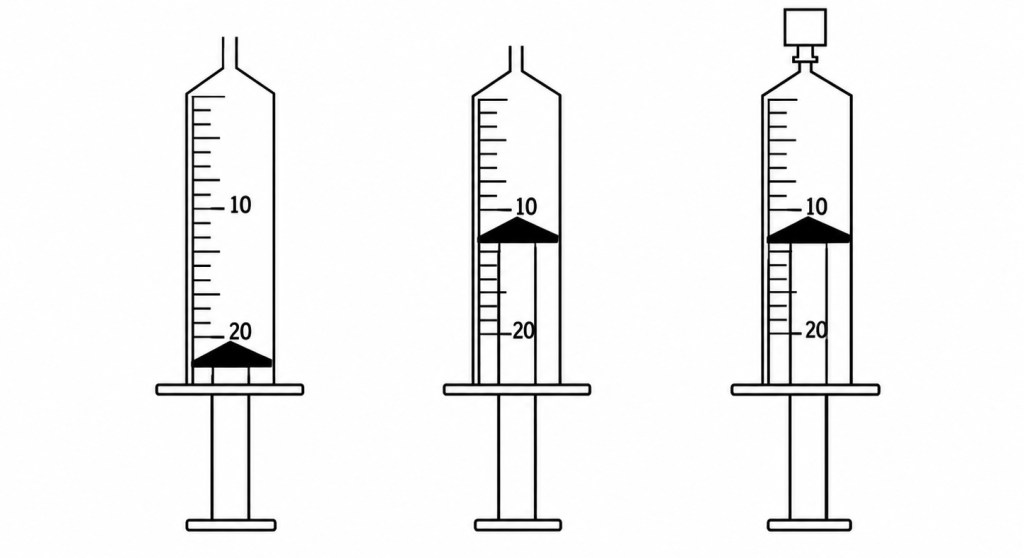
APPENDIX 1
The plunger of a 20-ml syringe (B-D Plastipak) is withdrawn to the 20 ml mark to trap 20 ml of air. The end is then occluded with an obturator (Vygon duodenal stopper; a push-and-twist technique is recommended for reasons that will become obvious when tried in practice).
Depressing the plunger to the 10 ml mark requires a force of 30 N to be exerted by the operator’s fingers. Wilson (2003)
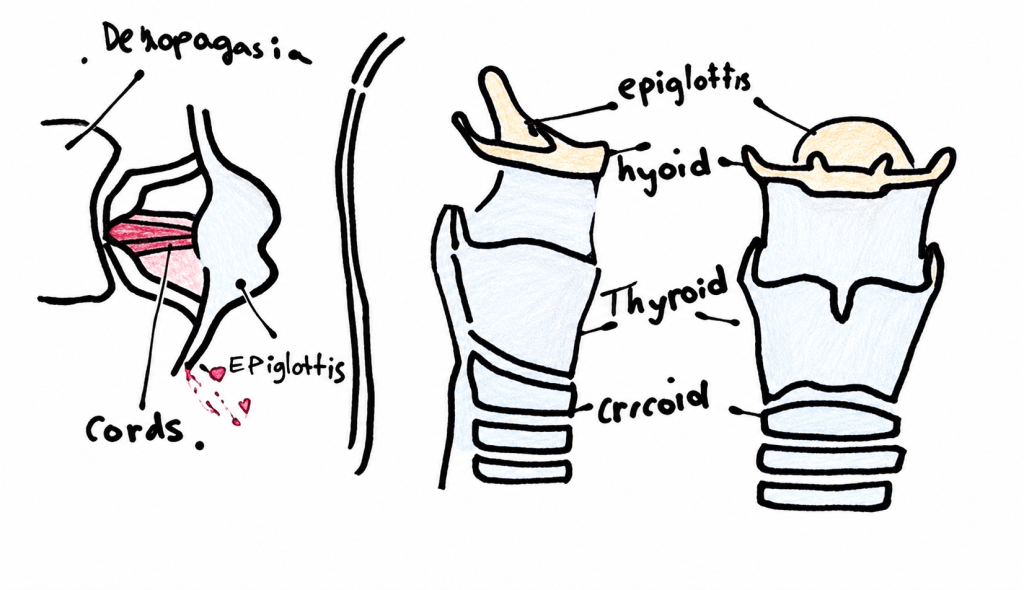
APPENDIX 2
Hand-drawn anatomical teaching illustration showing the relationship between the:
- oesophagus
- cricoid cartilage
- thyroid cartilage
- larynx/trachea
- cervical vertebrae
used during the teaching session to explain the anatomical basis of cricoid pressure.
References
ANDERSON, J. (1988) The supervisory process in speech, language pathology and audiology. Boston: College Hill Press.
AUSTRALIAN RESUSCITATION COUNCIL (2010) Guideline 11.2. [Online] Available from resus.org.au.
BENNER, P. (2001) From Novice to Expert: Excellence and Power in Clinical Nursing Practice. London: Prentice Hall.
BENNETT, C. (2003) How to be a good mentor. Nursing Standard 17(36).
BOCOS, A., BIDDLE, J., HUNTINGTON, S., LORD, S. & MILTON, S. (2005) Supporting Students in the Perioperative Environment. 2nd edn. Harrogate: The Association for Perioperative Practice.
BURNARD, P. (2002) Learning Human Skills. An Experiential and reflective guide for nurses and health care professionals. 4th ed. Oxford: Butterworth Heinemann.
DENT, J. & HARDEN, R. (Eds.) (2005) A practical guide for medical teachers. London: Elsevier Churchill Livingstone.
DOH (2001) The NHS Skills Escalator. London: Department of Health Publications.
DOH (2004) Knowledge skills framework. London: Department of Health Publications.
FOSTER-TURNER, J. (2006) Coaching and mentoring in Health and social care: The essentials of practice for professionals and organizations. Oxford: Radcliffe Publishing.
GAGNE, R. (1970) The Conditions of learning. 2nd ed. London: Holt Rinehart and Winston Inc.
GEORGESCU, A., MILLER, J. & LECKLITNER, M. (1992) The Sellick maneuver causing complete airway obstruction. Anaesthesia & Analgesia, 74:457-9.
GOPEE, N. (2010) Practice teaching in healthcare. London: Sage.
GROSSMAN, S. (2007) Mentoring in Nursing practice and collaborative process. New York: Springer Publishing Company.
HEALTH PROFESSIONALS COUNCIL (2008) Standards of Proficiency: Operating Department Practitioners. London: HPC.
HEALTH PROFESSIONALS COUNCIL (2009) Standards of Conduct, Performance and Ethics. London: HPC.
HEATH, M., PALMER, M. & FLETCHER, S. (1996) Fracture of the cricoid cartilage after Sellick’s manoeuvre. British Journal of Anaesthesia, 76:877-8.
HERMAN, N., CARTER, B. & VANDECART, T. (1996) Cricoid Pressure: Teaching the Recommended level. Anaesthesia & Analgesia, 83:859-63.
HINE, C. & OWEN, H. (2005) The effective application of cricoid pressure. Journal of Emergency Primary Health Care, 3(1) 7.
JONES (2007) Managing Performance, Delivering results through others. London: Pearson Prentice Hall.
KINNELL, D. & HUGHES, P. (2010) The practitioner as teacher. 3rd ed. Edinburgh: Churchill Livingstone.
KNOWLES, M. (1994) Andragogy in action. San Francisco: Jossey-Bass.
MASLOW, A. (1954) Motivation and personality. New York: Harper and Row.
MILLER, G. (1990) The Assessment of Clinical Skills / Competence / Performance. Academic Medicine 65(9):63-67.
MORRISON, L., KIERZEK, G., DIEKEMA, D., SAYRE, M., SILVERS, S., IDRIS, A. & MANCINI, E. (2010) Part 3: Ethics. American Heart Association Guidelines for Cardiopulmonary Resuscitation and Emergency Cardiovascular Care.
OGIER, M. & BARNETT, D. (1991) Developing potential through feedback. Nursing Standard 5(5):25-27.
OVASSAPIAN, A. & RAMEZ SALEM, M. (2009) Sellick’s maneuver to do or not to. International Anesthesia Research Society, 109(5):1360-62.
OWEN, H., FOLLOWS, V., REYNOLDS, V., BURGESS, G. & PLUMMER, J. (2002) Learning to apply effective cricoid pressure using a part task trainer. Anaesthesia, 57:109-110.
ROGERS, C. (1969) Freedom to learn: a view of what education might become. Columbus, OH: Charles E. Merrill.
ROMBEAU, J., GOLDBERG, A. & LOVELAND-JONES, C. (2010) Surgical Mentoring: Building tomorrow’s leaders. New York: Springer Publishing Company.
SELLICK, B. (1961) Cricoid pressure to control regurgitation of stomach contents during induction of anaesthesia. The Lancet (2):404-406.
SINCLAIR, R. & LUXTON, M. (2005) Rapid Sequence Induction. Continuing Education in Anaesthesia, Critical Care and Pain, 5(2):45-8.
STEINAKER, N. & BELL, M. (1979) The Experiential Taxonomy: A New Approach to Teaching and Learning. New York: Academic Press.
STUART, C. (2007) Assessment, Supervision and support in clinical practice: a guide for nurses, midwives and other health professionals. 2nd ed. Edinburgh: Churchill Livingstone Elsevier.
TOURNADRE, J., CHASSARD, D., BERRADA, K. & BOULETREAU, P. (1997) Cricoid cartilage pressure decreases lower oesophageal sphincter tone. Anesthesiology 86(1):7-9.
WILSON, N. (2003) No pressure! Just feel the force. Anaesthesia, 58:595.
ZACHARY, L. (2000) The Mentor’s Guide. San Francisco: Jossey-Bass.

